
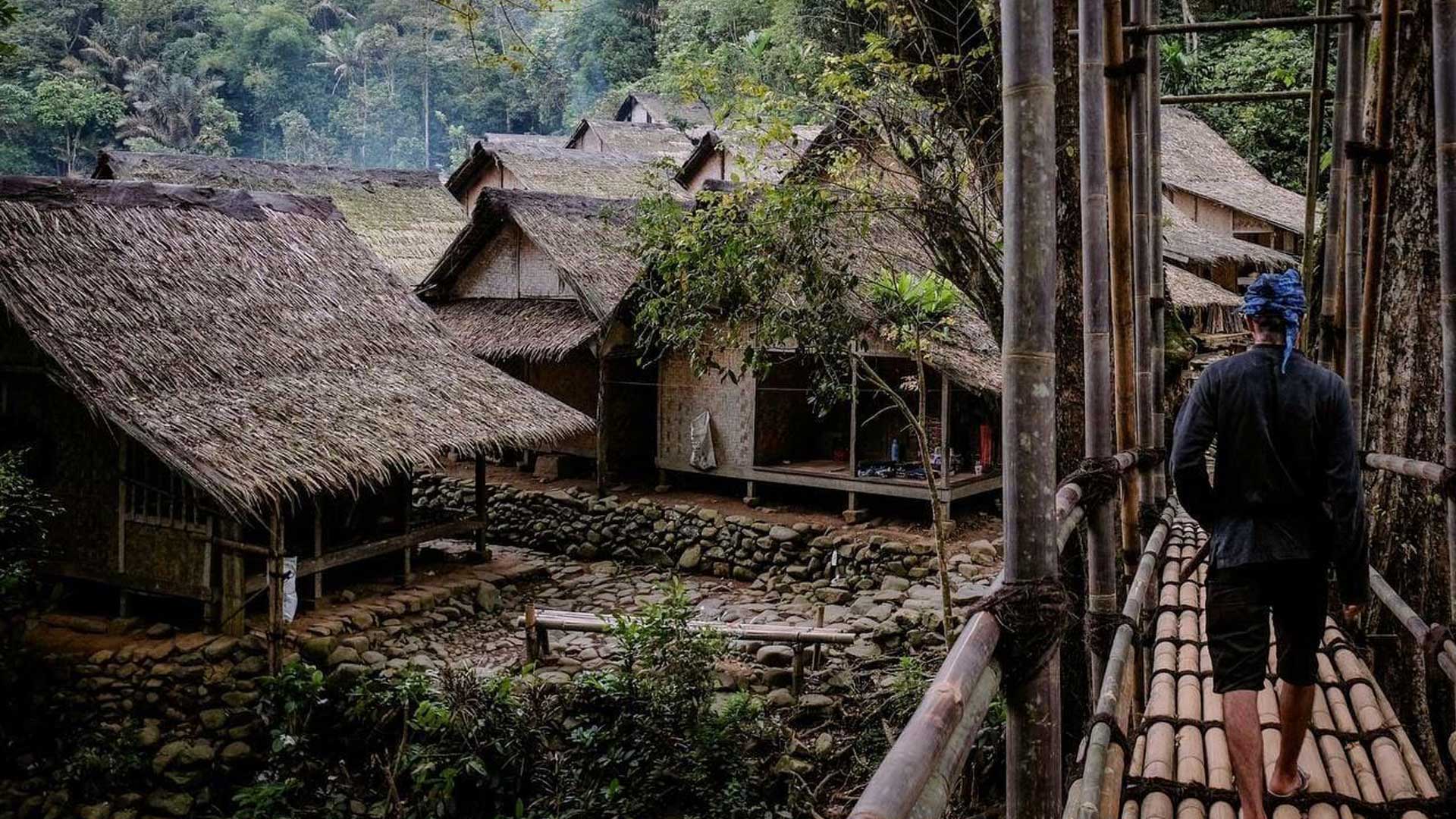
Traditional Baduy village in Kanekes, Banten, Indonesia

Kanekes · Lebak · Banten

Baduy Village

Discover the living traditions of the Baduy community, where customary law, simple architecture and respect for nature shape everyday life.

Discover Baduy Village

A Living Culture Rooted in Custom and Nature

In the green hills of Kanekes, Lebak Regency, Banten, the Baduy community maintains a distinctive cultural life shaped by ancestral teachings, customary leadership and a close relationship with the surrounding landscape. A visit is not simply a sightseeing trip: it is an opportunity to learn by listening, walking respectfully and understanding that the community's customs take priority over a visitor's expectations. The area includes Baduy Luar, where visits are more commonly received, and Baduy Dalam, whose rules and access restrictions are stricter. Travel arrangements should be made with a local Baduy guide, and all current customary instructions must be followed.

Location

Kanekes, Lebak

Community

Indigenous Sundanese

Known For

Custom & Craft

Travel Style

Guided Walking Visit

Culture and place

What Makes Baduy Village Special?

The value of a visit lies in understanding a living community on its own terms—not treating its homes, beliefs or daily routines as a performance for visitors.

Community and Custom

Learn Through Respectful Encounters

PIKUKUH

Ancestral Teachings and Daily Life

Baduy customary life is guided by Pikukuh, a body of ancestral principles that shapes relationships with land, community and the natural world. Practices vary between Baduy Luar and Baduy Dalam, and visitors should not assume that the same rules apply everywhere. Listen to your guide, accept boundaries without argument and avoid asking residents to change their routines for photographs or demonstrations.

HOMES &
VILLAGES

Traditional Architecture and Settlement

Villages feature houses built with natural materials such as bamboo, timber and thatch, adapted to local conditions and customary practices. Walking between settlements offers a view of the landscape and paths that connect the community. These are lived-in homes, not museum exhibits: do not enter houses, photograph people or private spaces, or handle belongings unless you have been explicitly invited and permission has been given.

HAND-
WOVEN

Textiles, Handcrafts and Local Livelihoods

Handwoven textiles and other locally made crafts can provide insight into skills passed between generations. Where local people choose to offer products for sale, buying directly and paying a fair price can support household livelihoods. Ask before taking photographs of artisans or their work, and understand that some cultural practices and objects may not be available for public display.

LAND &
WATER

A Relationship with the Natural Environment

The hills, streams, fields and forest around Kanekes are part of the community's wider cultural landscape. Visitors can learn about local approaches to land stewardship while keeping to permitted paths. Do not leave rubbish, pollute streams, damage plants or treat sacred or restricted places as attractions. The most meaningful visit is one that leaves daily life and the landscape undisturbed.

Visitor experience

How to Prepare for a Visit

Expect a walking-based cultural visit with limited facilities in some areas. Good preparation and a willingness to follow local guidance will make the experience more rewarding.

What You May Experience

  • Walk along village paths and rural trails with a local guide.
  • Learn about customary values, traditional houses and everyday community life where visits are permitted.
  • See locally made textiles and crafts offered by community members.
  • Observe the landscape of hills, streams, gardens and forest edges.
  • Gain context about the differences between Baduy Luar and Baduy Dalam.
  • Support local livelihoods through respectful, direct purchases where available.

Respectful Visitor Guidelines

  • Arrange the visit with a local Baduy guide and follow customary leaders' instructions.
  • Ask permission before photographing people, homes or activities; photography is prohibited in Baduy Dalam.
  • Follow rules about phones, cameras, toiletries and other items in restricted areas.
  • Dress modestly, speak quietly and do not intrude on ceremonies or private activities.
  • Carry your rubbish out and avoid polluting rivers or streams.
  • Check closures and access rules before travel; customary restrictions may change during sacred periods.
Getting there

Plan the Journey to Kanekes in Advance

A common route from Jakarta is by train to Rangkasbitung, followed by local transport toward Ciboleger, a known access point for visits to the Baduy area. From there, travel continues on foot along village paths and hilly terrain. Transport connections, walking routes and access arrangements can vary, so confirm current details with a local guide before departure. Bring drinking water, suitable walking footwear and a small day bag, and allow enough time to walk at a pace that respects both the terrain and the community.

Important to know

Customary Rules Come First

Baduy Village is a living Indigenous community, not a conventional tourist attraction. Some areas have strict rules on photography, electronic devices and visitor behaviour; access to Baduy Dalam is restricted, and foreign visitors may be prohibited from entering certain inner villages. During customary periods such as Kawalu, access can be limited or closed. Check the latest guidance with local customary representatives or an authorized local guide before setting out. Never assume that an old travel itinerary overrides current community rules.

Visit Baduy Village

Discover Baduy Culture with Respect

Plan a thoughtful cultural journey with local guidance, an open mind and a commitment to honouring the community's customs and boundaries.